 ultimate-guide
Best Ways to See Costa Rica: A Practical Travel Guide
Last Updated: November 7, 2026
Quick Summary
The best ways to see in Costa Rica depend on your group, so match the route to your travellers rather than the map. Choose a rental car for flexibility, shared shuttles for stress-free transfers, or domestic flights to save hours on long hauls. Plan no more than one major transfer per day and keep a buffer day.
- Families with young kids and seniors do best with one or two bases and short transfers over 7-10 days.
- Shared shuttles cost roughly ₡15,000-₡45,000 per person per leg on popular routes.
- Add 20-30% to any online travel time estimate and plan one major transfer per day.
- The dry season runs roughly December through April and is the busiest, priciest window.
- Wildlife viewing works best early, when animals are most active around dawn.
Table of Contents
- Best Ways to See Costa Rica: Start With a Decision Framework
- How to Get Around Costa Rica: Driving, Shuttles, and Flights Compared
- Costa Rica Public Transportation: Buses, Shared Shuttles, and When They Work
- Building a Costa Rica Road Trip Itinerary That Fits Your Days
- A Costa Rica Itinerary for First-Time Visitors: 7, 10, and 14 Days
- Beaches and Coastal Destinations: Where the Coast Changes Character
- Rainforest, Cloud Forest, and Wildlife: Seeing Biodiversity Without the Rush
- Volcanoes, Waterfalls, and Hot Springs: The Inland Route
- Adventure Activities: Hiking, Ziplining, Surfing, and Snorkeling
- Dry Season, Rainy Season, and Regional Climate: Timing Your Route
- Trip Costs, Park Entrance Fees, and Responsible Wildlife Viewing
- Plan Your Tamarindo Base With Locally Owned Tours
- Frequently Asked Questions
Best Ways to See Costa Rica: Start With a Decision Framework
The best ways to see in Costa Rica rarely start with a map. They start with an honest look at who is travelling. Groups often arrive with ambitious itineraries and leave exhausted, and the pattern usually traces back to one mistake: choosing destinations before choosing a travel style.
Costa Rica packs an enormous amount of biodiversity into a small country. Rainforest, cloud forest, coastline, and volcanic highlands can all sit within a few hours of each other on paper. In practice, road conditions, regional climate, and travel time decide what is realistic. That gap between the map and the road is where most first-time itineraries fall apart.
Below, we break down the best ways to see in Costa Rica by transport, region, activity, and season, so you can match the route to your group rather than to a wish list.
Match the Route to Your Group, Not the Map
Different travellers need different routes. A family with young kids and a grandparent should not be chasing five destinations in a week. Couples often want fewer stops and longer stays. Groups of friends chasing surfing and deep-sea fishing need a base that keeps both within reach.
We use a simple decision framework:
| Traveller type | Best route shape | Ideal trip duration | Priority |
|---|---|---|---|
| Family with young kids and seniors | One or two bases, short transfers | 7-10 days | Comfort and easy access |
| Couples | Two bases, one inland and one coastal | 7-10 days | Scenic views and quiet |
| Groups of friends | Single adventure base with day trips | 5-7 days | Surfing, fishing, ziplining |
| Multi-generational group | One base with varied daily options | 10-14 days | Flexibility for all ages |
Ideal trip duration
The framework matters more than any single destination list. Once you know your group, the route writes itself.
How to Get Around Costa Rica: Driving, Shuttles, and Flights Compared
Knowing how to get around is the single biggest factor in how much you actually see. The country offers three main options, and each suits a different kind of trip. The table below is the summary; the detail underneath is where itineraries succeed or fail.
| Transport mode | Best for | Typical cost signal (CRC) | Trade-off |
|---|---|---|---|
| Rental car | Flexibility and off the beaten path stops | From roughly ₡35,000-₡70,000 per day depending on vehicle class and season, plus fuel and insurance | Navigation, mountain roads, rainy-season driving |
| Shared shuttle | Stress-free point-to-point travel | Roughly ₡15,000-₡45,000 per person per leg on popular routes | Fixed departure times, shared vehicle |
| Domestic flight | Long-distance time savings | Roughly ₡60,000-₡120,000 per person per leg, with strict baggage limits | Cost, luggage limits, airstrip schedules |
| Public bus | Budget travel with a loose schedule | Often under ₡5,000 for many inter-town routes | Slow journeys, terminal confusion, connections |
Fares and rental rates move with season, group size, and how far ahead you book, so confirm current pricing before you commit.
Renting a car gives you the most freedom. You set your own pace, stop at hidden gems, and reach off the beaten path spots that tours skip. The trade-off is real: mountain roads wind sharply, signage is inconsistent, and rainy season driving demands caution. According to Costa Rica's official tourism institute, many visitors underestimate drive times between regions. A common pattern is to book a rental for a route that crosses three climate zones in a week, which means long days behind the wheel and less time at each stop.
Shared shuttles cover the popular routes between towns and tourist hubs. They are comfortable and remove the stress of navigation, though departure times are fixed and you share the vehicle with other travellers. They sit between public buses and private transfers: more expensive than a bus, far cheaper than a private vehicle, and they run on tourist-friendly routes.
Domestic flights connect the capital region with several coastal and regional airstrips. They save hours on long hauls but add cost and luggage limits. On a tight itinerary, a single short flight can buy back most of a day.
Public buses are extensive, affordable, and genuinely useful for travellers with flexible schedules. The national bus network reaches most towns and fares are low. The catch is time: journeys are often slow, terminals can be confusing, and schedules may not align with your plans. Public buses work best for budget-conscious travellers with loose schedules, short hops between nearby towns, and travellers staying in one region. They work poorly for tight itineraries with fixed tour bookings, families with young children and luggage, and routes that require multiple connections in a day.
Realistic Travel Times and Road Conditions
Travel time is where itineraries break. A route that looks short on a map can take far longer once you account for winding mountain roads, construction, and weather. As a rule of thumb, plan on average road speeds well below what you would expect on highways, and add 20-30% to any estimate you find online. Build buffer time into every transfer day. We advise planning no more than one major transfer per day, and always confirming road conditions before a long drive during the rainy season.
A few route-planning principles hold up across most trips:
- Group by region, not by wish list. Pick one or two bases and layer day trips from each, rather than moving hotels every night.
- Match the transfer to the terrain. A short hop between two coastal towns is very different from a mountain crossing into cloud forest country.
- Keep a buffer day. Flight delays and slow roads are part of travel here, and a spare day absorbs them without wrecking the trip.
- Confirm the last leg. The final transfer back to your departure airport is the one most often squeezed, and the one most likely to go wrong.
Watch out: booking a rental car for a route that crosses three climate zones in a week is the most common way a good itinerary turns into a driving holiday. If your trip hinges on a booked activity, a fixed shuttle or private transfer protects your schedule; missing a connection because a bus ran late is a frustration we hear about often.
Costa Rica Public Transportation: Buses, Shared Shuttles, and When They Work
Costa Rica public transportation is extensive, affordable, and genuinely useful for travellers with flexible schedules. The national bus network reaches most towns, and fares are low. The catch is time: journeys are often slow, terminals can be confusing, and schedules may not align with your plans.
Shared shuttles sit between public buses and private transfers. They cost more than a bus but far less than a private vehicle, and they run on tourist-friendly routes.
Public buses work best for:
- Budget-conscious travellers with loose schedules
- Short hops between nearby towns
- Travellers staying in one region
They work poorly for:
- Tight itineraries with fixed tour bookings
- Families with young children and luggage
- Routes that require multiple connections in a day
If your trip hinges on a booked activity, a fixed shuttle or private transfer protects your schedule. Missing a connection because a bus ran late is a common frustration we hear about.
Building a Costa Rica Road Trip Itinerary That Fits Your Days
A Costa Rica road trip itinerary succeeds when it respects distance. The temptation is to list every famous spot and connect them. The better approach is to pick a region and go deep.
Start with your arrival airport and your departure point. Then choose one or two bases. From each base, layer in day trips rather than moving hotels every night. This reduces packing, cuts transfer stress, and gives you time to actually experience a place.
A workable structure looks like this:
- Land and stay near your arrival point for the first night
- Move to your primary base and stay at least three nights
- Add day trips from that base
- Transfer once to a second base if time allows
- Return to your departure point with a buffer day
The buffer day is not optional. Flight delays and slow roads are part of travel here, and a spare day absorbs them without wrecking the trip.
A Costa Rica Itinerary for First-Time Visitors: 7, 10, and 14 Days
A Costa Rica itinerary for first-time visitors should trade breadth for depth. Here is how we would structure three common trip lengths.
7 days: One coastal base plus one inland excursion. Spend most nights on the coast, take a single volcano or rainforest day trip, and keep transfers to two. This suits families and travellers who want a relaxed pace.
10 days: Two bases, one coastal and one inland. Add a waterfall or hot springs stop and one adventure activity. This is the sweet spot for couples and multi-generational groups.
14 days: Three bases with room to breathe. Combine coast, cloud forest, and volcano country, and include a slow day at each base. Groups of friends can split activities here without derailing the whole trip.
| Trip length | Bases | Best for | Pace |
|---|---|---|---|
| 7 days | 1-2 | Families, short breaks | Relaxed |
| 10 days | 2 | Couples, multi-generational | Balanced |
| 14 days | 3 | Groups, thorough first visit | Comfortable |
Beaches and Coastal Destinations: Where the Coast Changes Character
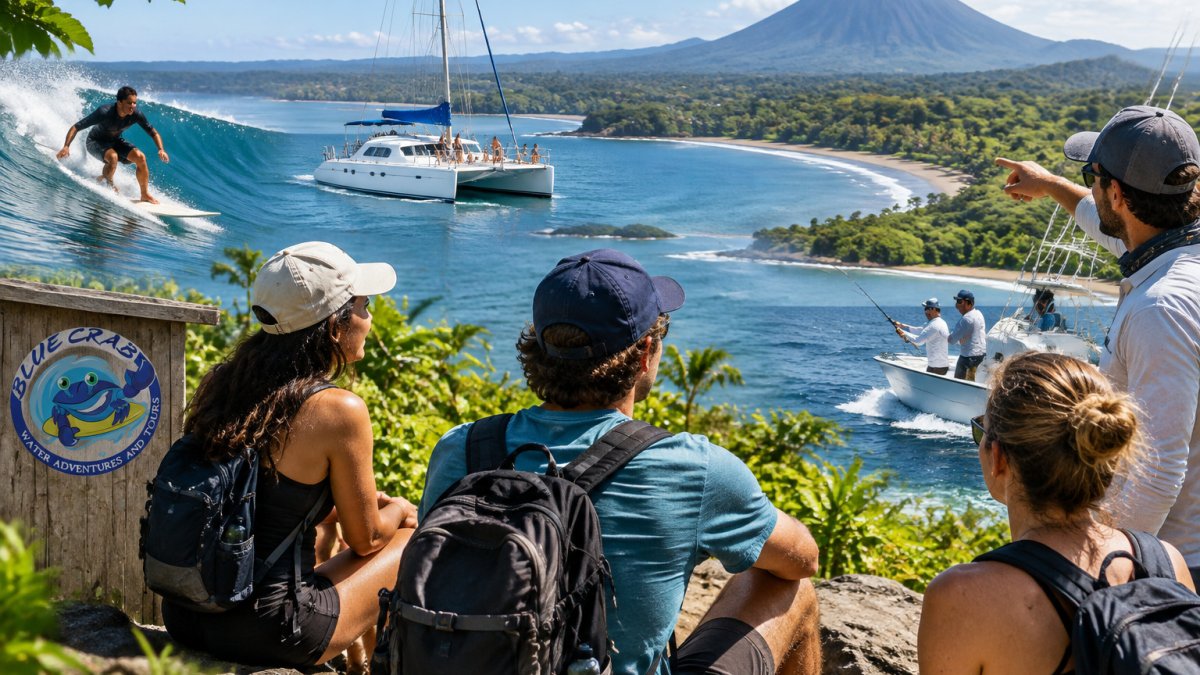
The coastline here changes character from one bay to the next. Some beaches suit surfing, with consistent swell and open water. Others are calm and shallow, better for families with young swimmers. A few are remote and quiet, reached only by rough roads.
The northwest coast around Tamarindo pairs well with adventure activities and easy access to amenities. Further south, the coast grows wilder and less developed, which appeals to travellers seeking hidden gems and off the beaten path scenery.
Choosing a beach comes down to three questions: Do you want waves or calm water? Do you need restaurants and shops nearby? How far are you willing to drive on rough roads? Answer those honestly and the right stretch of coast becomes obvious.
Rainforest, Cloud Forest, and Wildlife: Seeing Biodiversity Without the Rush
The biodiversity here rewards patience. Rainforest and cloud forest are different ecosystems, and each delivers a distinct experience. Lowland rainforest is hot, dense, and loud with wildlife. Cloud forest sits higher, cooler, and misty, with different species and dramatic scenic views.
Wildlife viewing works best early. Animals are most active around dawn, and trails are quieter before the crowds arrive. A guided walk multiplies what you see: a good naturalist spots creatures that blend into the canopy and explains the ecology behind them.
Responsible viewing matters. Keep a respectful distance, never feed wildlife, and follow your guide's instructions on where to stand. Flash photography disturbs nocturnal animals. Choosing licensed guides and established trails protects the very biodiversity you came to see.
Volcanoes, Waterfalls, and Hot Springs: The Inland Route
The inland route strings together the country's volcanic highlands, waterfalls, and hot springs. This is the classic counterpoint to beach time, and it works best as a two- or three-night stay rather than a rushed day trip.
Volcano areas offer hiking trails, scenic views, and, on clear mornings, the chance to see craters and fumaroles. Waterfalls reward short hikes, though trail difficulty varies and some paths turn slippery in the rain. Hot springs, heated by volcanic activity, are the reward at the end of a long day.
If you are mapping this route yourself, our guide on how to plan Tamarindo volcano tours walks through the steps so you are not guessing at timing or logistics. Distances between stops are longer than they look, and afternoon rain can slow the drive.
Adventure Activities: Hiking, Ziplining, Surfing, and Snorkeling
Adventure activities are where this country shines, and the range suits almost every age and comfort level. Hiking spans gentle nature walks to steep jungle trails. Ziplining sends you above the canopy on cables with professional guides. Surfing suits beginners on soft beach breaks and experienced riders on bigger swell. Snorkeling opens up the underwater side of the coast.
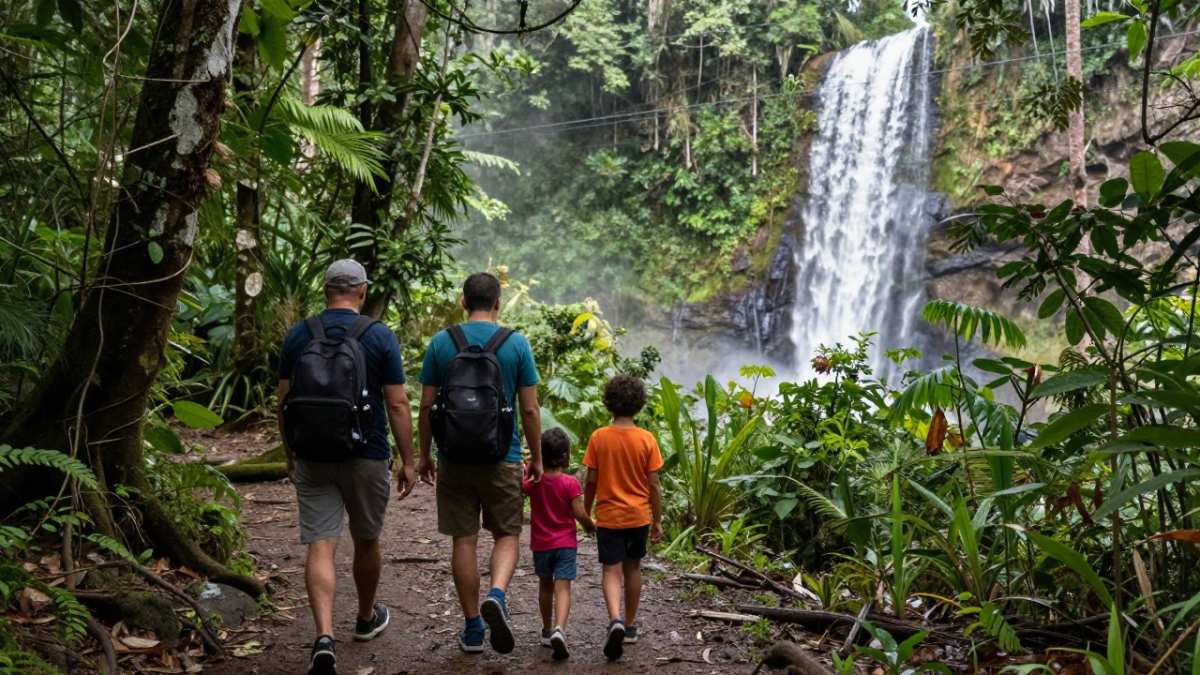
The key is matching the activity to the group. A zipline that thrills a teenager may not suit a nervous grandparent, and a surf lesson needs different conditions than a snorkeling trip. Custom itineraries are offered for groups of all sizes, so a group can split across activities.
If surfing is on your list, our guide on booking private surf lessons explains how to arrange instruction that fits your schedule and skill level.
Dry Season, Rainy Season, and Regional Climate: Timing Your Route
Timing shapes everything. The dry season, roughly December through April, brings sunshine and firm roads, and it is the busiest window. The rainy season, from May through November, delivers afternoon downpours, greener landscapes, and fewer crowds.
Regional climate varies more than most visitors expect. The northwest coast is drier than the Caribbean side, and cloud forest regions see rain year-round. A route that works in February may need adjustment in September.
Planning around the rainy season is not about avoiding it. Mornings are typically clear, so schedule outdoor activities early and keep afternoons flexible. Build buffer time for wet roads, and confirm tour schedules account for weather.
Trip Costs, Park Entrance Fees, and Responsible Wildlife Viewing
A realistic travel budget depends on your route, your accommodation, and how many guided activities you book. Here is a version of the budget picture that first-time visitors often find useful before they book.
We recommend budgeting in three buckets, transport, accommodation, and activities, and keeping a contingency for fees and extras. Costs shift with season, group size, and how far ahead you book.
| Bucket | Budget style (CRC) | Mid-range style (CRC) | Comfort style (CRC) |
|---|---|---|---|
| Accommodation (per night) | Roughly ₡25,000-₡45,000 | Roughly ₡60,000-₡120,000 | Roughly ₡150,000 and up |
| Food (per person per day) | Roughly ₡10,000-₡18,000 | Roughly ₡20,000-₡35,000 | Roughly ₡40,000 and up |
| Guided activities (per person) | Roughly ₡25,000-₡45,000 | Roughly ₡50,000-₡90,000 | Roughly ₡100,000 and up |
| Park entrance (per person) | Often ₡1,000-₡2,000 for residents; foreign visitor rates are typically several times higher and vary by park | Same | Same |
Transport is often the biggest variable: rental cars, shuttles, and domestic flights differ widely in cost, and park entrance fees apply at national parks and protected areas. Park entrance fees apply at national parks and protected areas, so confirm the current rate for each protected area before you go.
Seasonal variation matters more than most people expect. The dry season, roughly December through April, is the busiest window and commands the highest accommodation and tour prices. The rainy season, from May through November, delivers afternoon downpours, greener landscapes, and fewer crowds, and often noticeably lower rates, especially on lodging. A route that works in February may need a different budget in September.
Watch out: the two costs most often left out of a first budget are the contingency for weather-driven changes and the park fees themselves. Both are small line items individually and surprisingly large across a two-week trip.
Responsible travel ties the whole trip together. Choose locally owned operators, follow wildlife viewing guidelines, and respect protected areas. Keep a respectful distance, never feed wildlife, and follow your guide's instructions on where to stand. Flash photography disturbs nocturnal animals. Choosing licensed guides and established trails protects the very biodiversity you came to see. Ecotourism only works when visitors and operators protect what makes this place worth seeing.
Current prices for tours and transfers are best confirmed directly on the Blue Crab Tours website, since they shift with season and group size.
Plan Your Tamarindo Base With Locally Owned Tours
Tamarindo makes an excellent base because it puts beaches, adventure activities, and day trips within easy reach. The hard part is coordinating it all without losing days to logistics.
That is where we come in. Blue Crab Tours is locally owned, with bilingual guides and more than 15 years of experience building custom itineraries for families, couples, and groups of friends. We offer catamaran sunset cruises, volcano tours, surf lessons, and deep-sea fishing, with hotel and airport pick-up included on most tours. Our 4.9★ rating on Tripadvisor across 174+ reviews reflects the experience our guests have shared.
Tell us your dates, your group, and what you want to see. We will handle the rest, including the buffer time that keeps a good itinerary from turning into a rushed one.
Ready to turn your plan into a booked trip? Get started with Blue Crab Tours and see the real Costa Rica with guides who know every road and every season.
Frequently Asked Questions
What is the best way to travel around Costa Rica?
It depends on your group and route. A rental car gives the most freedom, but driving times are longer than the map suggests, especially in the rainy season. Shared shuttles suit travelers who want fixed transfers without navigating. Domestic flights cut long distances but add airport time and baggage limits. For families and groups based in one coastal town, guided tours with hotel pick-up often remove the most friction because you see the country without coordinating every leg yourself.
Is it better to rent a car or use public transportation in Costa Rica?
Rent a car if you want to link several regions on your own schedule and are comfortable with mountain roads, river crossings, and night-driving limits. Choose public transportation if your itinerary is simple and you can travel light. Public buses reach most towns and cost far less, but schedules are infrequent and transfers can eat a day. A common middle path is a shuttle between bases plus locally booked tours once you arrive.
How many days do you need to see Costa Rica?
Seven days works for one region, such as a beach base with two or three day trips. Ten days lets you add a volcano or cloud forest without rushing. Fourteen days supports a loop of three or four regions with realistic travel times. The mistake most visitors make is booking too many destinations for the days available; every move between regions costs half a day or more once you account for check-out, driving, and check-in.
Can you see Costa Rica without renting a car?
Yes. Shared shuttles, public buses, and domestic flights cover the main routes, and guided tours typically include hotel pick-up. Base yourself in one or two towns and take day trips rather than moving every night. This works well for families and multi-generational groups because nobody has to drive unfamiliar roads. Confirm pick-up details and timing in advance, and build a buffer around any transfer that connects to a flight or a boat.
What is the best time of year to visit Costa Rica?
The dry season, roughly December through April, brings sunshine on the Pacific coast and is the busiest period. The rainy season, May through November, means greener landscapes, fewer crowds, and lower accommodation rates, with rain often concentrated in the afternoon. The Caribbean coast runs on a different pattern and can be dry when the Pacific is wet. Regional climate matters more than the national forecast, so check conditions for the specific areas on your route.
Which areas should first-time visitors include in a Costa Rica itinerary?
Most first-time routes combine one beach area, one volcano or hot springs stop, and one rainforest or cloud forest reserve. From a Tamarindo base, you can add volcano tours and rainforest day trips without changing hotels. If you want to move around, pick two or three regions maximum for a ten-day trip and check travel times between them before booking. Fewer bases with longer stays usually produce a better trip than a packed checklist.